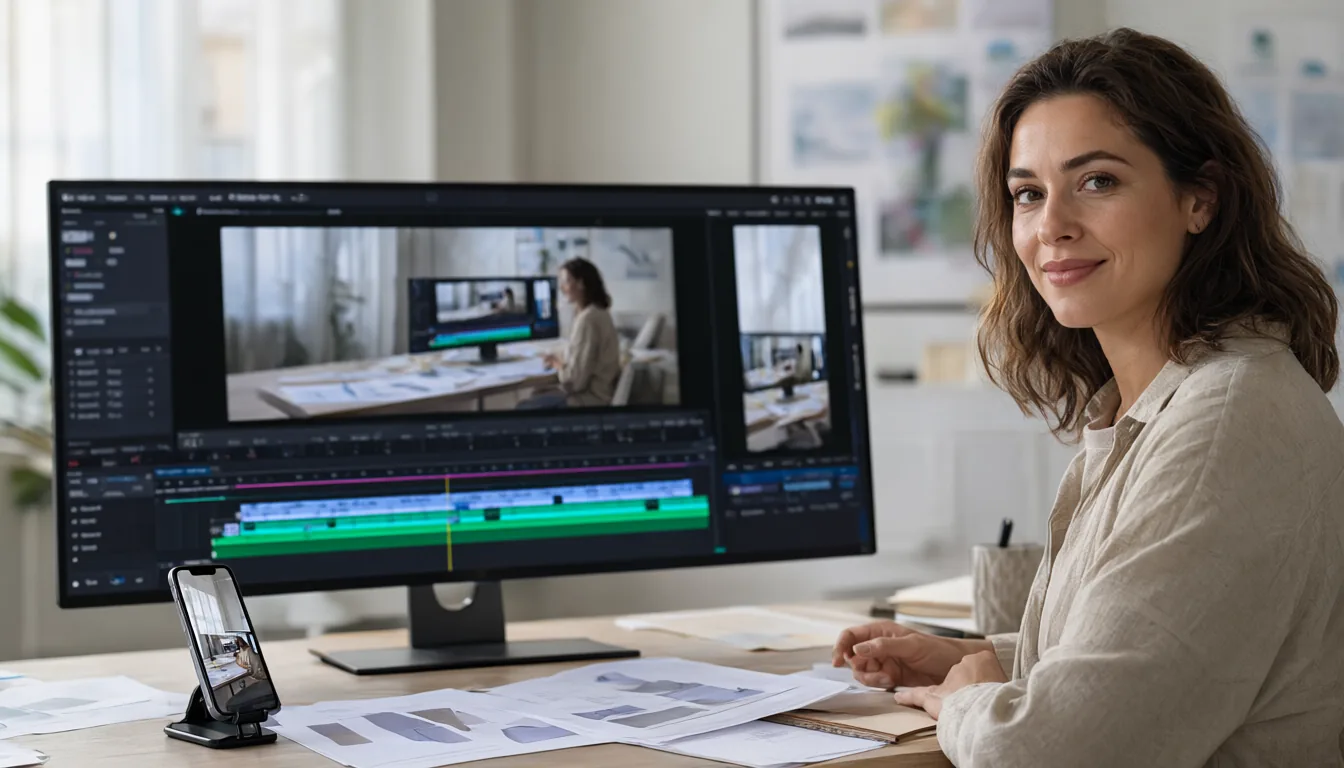
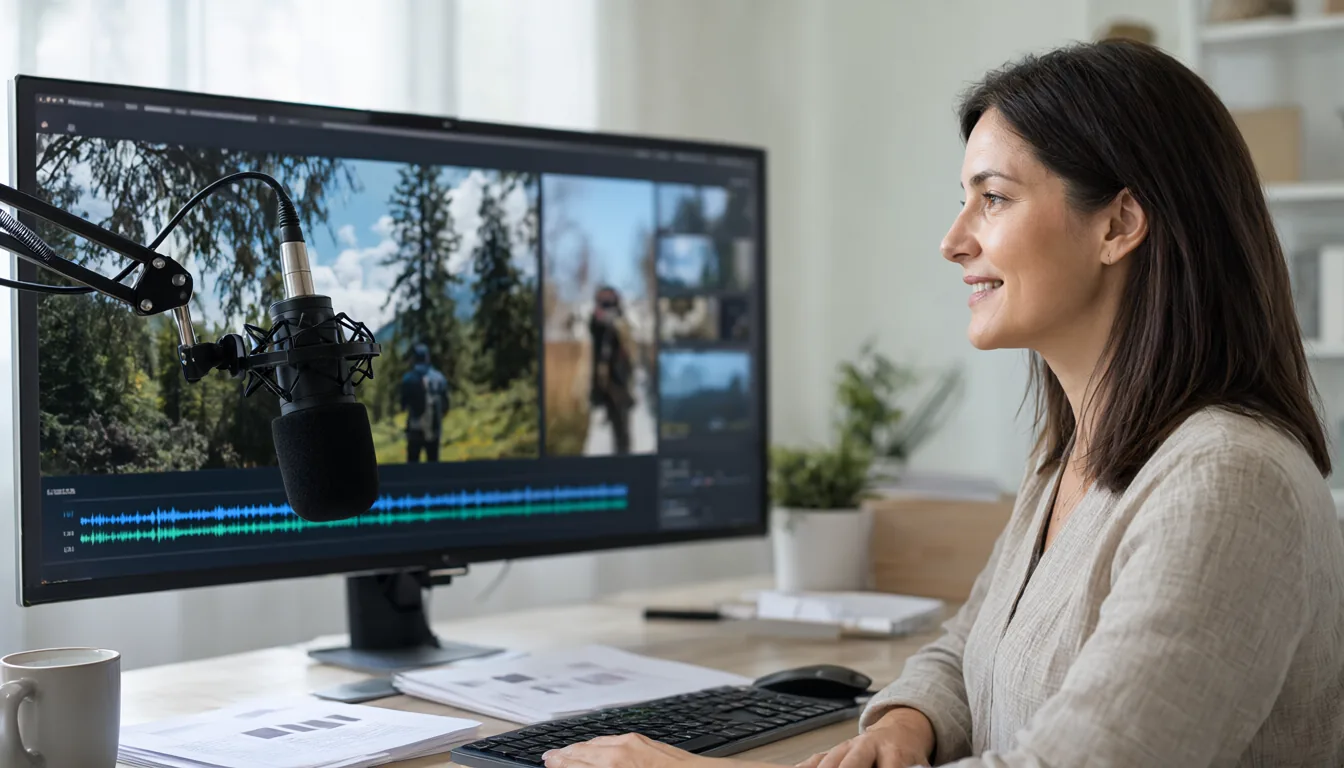
A faceless YouTube channel is one where you never appear on camera: the video is carried by your voice (or a synthetic voice), screen recordings, animation, stock or your own B-roll, or just your hands. It is one of the most searched creator topics for a reason. You can start without a studio, stay private, and outsource or automate parts of the work. It is also the type of channel YouTube’s newer monetisation rules watch most closely. In this guide you get 64 faceless channel ideas grouped by how the videos are actually made, an honest risk rating for each group, a free Claude Skill that validates any niche with a 35-point scorecard, and a step-by-step plan to launch your first ten videos.
- Best faceless formats in 2026: screen-recorded tutorials, researched voiceover explainers, hands-only/POV, and commentary on your own gameplay or tests. They add obvious original value.
- Riskiest formats: AI voice over random stock clips, “Top 10” compilations, slideshows, reading Reddit posts or articles, and re-uploaded clips. YouTube’s July 2025 “inauthentic content” update targets exactly these.
- The skill:
faceless-niche-validatorsuggests niches that fit your skills and scores any niche on demand, gap, format fit, originality, money paths, 50-video runway and policy risk (out of 35). - Monetisation bar: 1,000 subscribers + 4,000 watch hours (12 months) or 10M Shorts views (90 days) for ad revenue; a 500-subscriber fan-funding tier exists in many countries.
Read this first: what YouTube allows for faceless channels
Being faceless is not against any rule, and neither is using AI. YouTube’s own policy page says creators can use the tools they like. What it does check, when it reviews a channel for the YouTube Partner Program (YPP), is whether the channel as a whole is original and adds value. Two policies decide most faceless channel rejections:
- Inauthentic content (renamed from “repetitious content” on 15 July 2025). Not allowed: “image slideshows, templated storylines, or scrolling text with minimal or no narrative, commentary, or educational value”, and “AI-generated content made with generic or unoriginal templates giving the impression of mass production”. Allowed: the same intro and outro on every video, as long as the bulk of each video is different.
- Reused content. Not allowed: videos that only read material you did not create, or footage copied from elsewhere without substantive changes. Allowed: reaction or edited footage where you add real commentary and a storyline.
There is also a disclosure rule: if your video shows realistic AI-generated or altered people, places or events, tick the “altered or synthetic content” box when you upload in YouTube Studio. Cartoon-style or clearly unrealistic AI visuals do not need it.
The practical test I use: if someone watched three of your videos back to back, would they learn or feel something different in each, and could they tell a person made editorial choices? If yes, you are fine.
Faceless formats compared
| Format | How it is made | Effort per video | Policy risk | Best for |
|---|---|---|---|---|
| Screen-recorded tutorial | OBS or a screen recorder + your voiceover | Low-medium | Low | Software, AI tools, Excel, coding, phone tips |
| Researched voiceover explainer | Script + voice + stock/archive footage, maps, motion graphics | High | Low-medium (depends on research depth) | History, science, business stories, geography |
| Hands-only / POV | Overhead or chest camera, your hands and voice or captions | Medium | Low | Cooking, crafts, repairs, unboxing, builds |
| Gameplay with commentary | Capture + your analysis | Medium | Low-medium | Guides, strategy, game history |
| Animation / whiteboard | Animation tool or AI visuals of your own characters | High | Low if story is original | Psychology, stories, explainers |
| Data visualisation | Charts, maps, bar-race videos | Medium | Medium-high (easy to template) | Only with real analysis and narration |
| Ambient / music loops | Long loops of visuals and sound | Low | High | Only with your own music and genuinely different videos |
| Compilations / Top 10 / Reddit readings | Clips or text from others + TTS | Low | Very high | Avoid |
64 faceless YouTube channel ideas
Ideas are grouped by format, because the format decides your workload and your risk far more than the topic. For each one I added an example first video, so you can picture the channel.
Screen-recorded tutorials (low risk)
| # | Niche | Example first video |
|---|---|---|
| 1 | Local AI for beginners (Ollama, LM Studio) | Run a ChatGPT-style AI on your own PC in 10 minutes |
| 2 | ComfyUI and AI image workflows | Your first ComfyUI workflow, every node explained |
| 3 | Excel and Google Sheets for office jobs | 5 formulas that replace an hour of manual work |
| 4 | Notion / Obsidian setups for students | A complete semester planner from scratch |
| 5 | Canva for small businesses | Make a month of posts in one hour |
| 6 | Coding for absolute beginners (Python, JavaScript) | Build a tiny expense tracker, line by line |
| 7 | AI coding agents (Claude Code, Cursor, Codex) | Build and deploy a website with an AI agent |
| 8 | DaVinci Resolve / CapCut editing | Edit a vlog in 15 minutes with free software |
| 9 | Blender for beginners | Model a coffee cup in 20 minutes |
| 10 | Android and iPhone hidden features | 12 settings to change on a new phone |
| 11 | Windows fixes and speed-ups | Fix “disk 100%” on Windows 11 |
| 12 | Cybersecurity for normal people | Check if your passwords were leaked and what to do |
| 13 | WordPress and blogging | Launch a blog for under the price of lunch |
| 14 | Freelancing platforms walkthroughs | Set up a profile that gets the first client |
| 15 | Personal finance apps and tools (not advice) | Build a zero-based budget sheet |
| 16 | Language learning with apps and AI | Practise speaking Spanish with an AI tutor |
Researched voiceover explainers (low to medium risk)
| # | Niche | Example first video |
|---|---|---|
| 17 | History mysteries | The ship that vanished twice |
| 18 | Geography explained | Why this border has a strange shape |
| 19 | Business case studies | How a small brand beat a giant at its own game |
| 20 | Engineering megaprojects | How they build bridges in deep water |
| 21 | Space and astronomy news, explained | What the latest telescope image actually shows |
| 22 | Everyday science | Why ice is slippery (it is not what you think) |
| 23 | Mythology and folklore | The same flood myth in 5 cultures |
| 24 | Aviation explained | How pilots land in fog |
| 25 | Economics for beginners | Why prices rise after a shortage ends |
| 26 | Tech history | The rise and fall of a forgotten gadget |
| 27 | AI news with analysis | This week in AI: what actually matters to you |
| 28 | Food history | How the tomato conquered Italian cooking |
| 29 | Unusual laws and their stories | Strange laws that are still on the books |
| 30 | Architecture and cities | Why old towns have narrow, crooked streets |
| 31 | Psychology concepts | The decoy effect in shops you visit |
| 32 | Book lessons applied (not summaries) | I tried one habit from a famous book for 30 days |
Hands-only and POV (low risk)
| # | Niche | Example first video |
|---|---|---|
| 33 | Budget cooking | A week of dinners from one grocery bag |
| 34 | Baking basics | Bread with 4 ingredients and no machine |
| 35 | Phone and laptop repair | Replace a laptop battery safely |
| 36 | PC building | Build a budget AI PC step by step |
| 37 | Mechanical keyboards | Lube switches: before and after sound test |
| 38 | Miniature painting | Paint your first miniature with 5 colours |
| 39 | Calligraphy and lettering | Brush lettering for total beginners |
| 40 | Indoor plants | Repot a plant without killing it |
| 41 | Crafts and DIY decor | Make a lamp from scrap wood |
| 42 | Tech unboxing and first impressions | Unboxing a budget gadget, honest verdict |
| 43 | Car care DIY | Change wiper blades in 2 minutes |
| 44 | Sewing and clothing fixes | Fix a broken zip without replacing it |
| 45 | Drawing tutorials | Draw hands the easy way |
| 46 | Lego and model builds | Speed build with commentary on design tricks |
Gaming and commentary (low to medium risk)
| # | Niche | Example first video |
|---|---|---|
| 47 | Strategy game guides | The opening that wins most matches, explained |
| 48 | Retro game history | Why this 90s game was impossible to finish |
| 49 | Speedrun techniques explained | The glitch that cut an hour off the record |
| 50 | Cozy and simulation games | Build the perfect farm layout |
| 51 | Game settings and performance | Best settings for a budget GPU |
| 52 | Game lore | The full story of the game in 15 minutes |
Reviews, comparisons and data (medium risk, needs real analysis)
| # | Niche | Example first video |
|---|---|---|
| 53 | AI tool comparisons | I gave 4 AI tools the same task: results |
| 54 | Budget tech buying guides | Best phone under a set budget, compared on specs |
| 55 | App reviews for one profession | Best apps for nurses on shift |
| 56 | Software alternatives | Free alternatives to paid design apps |
| 57 | Data stories with maps | Where people actually move to, and why |
| 58 | Price history explainers | Why GPUs and RAM got so expensive |
Animation, stories and audio (medium to high risk)
| # | Niche | Example first video |
|---|---|---|
| 59 | Original animated stories with recurring characters | Episode 1 of a mini series you wrote |
| 60 | Bedtime stories you write (for adults) | A calm sleep story set in a lighthouse |
| 61 | Study music you compose | A focus mix with your own tracks and a timer |
| 62 | Nature sound recordings you capture | A real thunderstorm recorded on a porch |
| 63 | Short educational animations | How vaccines train your body, animated |
| 64 | Language stories for learners | A simple story in slow French with subtitles |
For story and audio channels, the risk comes from sameness. If every video uses the same AI voice, the same template and similar plots, it can look mass-produced. Recurring characters are fine; YouTube’s examples allow a series with a recurring format if each episode has its own storyline.
Ideas I deliberately left out: re-uploads of movies, TV, sports or music; “Top 10” compilations of other people’s clips; Reddit or article read-alouds; AI “doctors”, “lawyers” or “financial experts” (YouTube’s July 2026 guidance specifically calls out AI personas on sensitive topics); and kids’ content, which has extra rules and limits on comments and ads.
The faceless-niche-validator Claude Skill
Lists are a starting point. The real question is whether a niche fits you and can survive a YPP review. This skill does two jobs: in Mode A it suggests 12 niches based on what you know and how you can produce, and in Mode B it scores a niche on seven checks and forces it to list 15 real video ideas as proof of runway.
---
name: faceless-niche-validator
description: Generates faceless YouTube channel ideas and validates a chosen niche with a scorecard (demand, competition gaps, production format, monetization paths, policy risk, 50-video runway). Use when the user asks for faceless YouTube channel ideas, niche ideas, whether a niche is good, or how to start a channel without showing their face.
---

# Faceless niche validator

## Mode A: the user has no niche yet
1. Ask three things (skip any already answered): topics they know or enjoy, the production style they can do (voiceover + screen recording, voiceover + stock footage, animation, slideshow with real research, hands-only, AI visuals), and hours per week.
2. Suggest 12 niches that match. For each give: niche, example channel angle, production style, and 3 example video titles.
3. Ask the user to pick 1-3 to validate, then run Mode B.

## Mode B: validate a niche
Score each line from 1 (weak) to 5 (strong) and explain each score in one sentence:
| Check | Question |
|---|---|
| Demand | Do people actively search for this problem? (Use web search if available: look at YouTube autocomplete and the top results.) |
| Gap | Are top videos old, thin, low quality, or missing a viewer type? |
| Format fit | Can it be made well without a face, using the user's production style? |
| Originality | Can every video add real research, commentary, tests or teaching (not just reading or reposting)? |
| Money paths | Ads, affiliate products, sponsors, own product: which apply? |
| Runway | Can you list 50 distinct video ideas without repeating yourself? (List the first 15 as proof.) |
| Policy risk | 5 = low risk. Lower the score for reused footage, AI voice over stock clips with no added value, kids content, finance/health advice, or realistic AI people. |

Total out of 35. 28+: go. 21-27: go with a sharper angle (suggest it). Below 21: pick another niche.

## Rules
- Never quote RPM, CPM or income figures as facts. Say they vary by country, audience and season, and the user should check real creator reports or their own YouTube Studio data later.
- Explain YouTube's inauthentic content rule plainly: mass-produced, templated or repetitive videos (including AI-made ones) can be refused monetization. Every niche plan must say what original value each video adds.
- If a niche needs realistic AI-generated people, places or events, remind the user to use YouTube's "altered or synthetic content" disclosure.
- Do not suggest niches built on re-uploading movies, TV, sports clips, music or other creators' videos. Save it inside a folder named faceless-niche-validator
Install it like any other skill: save the file as faceless-niche-validator/SKILL.md, zip the folder and upload it under Customize > Skills on claude.ai, or copy the folder to ~/.claude/skills/ for Claude Code. Full steps are in my Claude Skills for YouTube guide, which also has nine more creator skills.
Then just ask: “I know a lot about mechanical keyboards and can film my hands, give me faceless channel ideas”, or “validate a faceless channel about aviation incidents explained”. If web search is available in your chat, the skill uses it to look at what already ranks; if not, it tells you the scores are unverified.
Worked example: scoring a niche
Here is the kind of scorecard the skill produces, shortened, for the niche “local AI tutorials for people with gaming PCs”. The reasoning is what matters, so check each line against your own research.
| Check | Score | Reason |
|---|---|---|
| Demand | 4 | People search exact problems (“run llama on 8gb gpu”, model file names) and new models release monthly. |
| Gap | 4 | Many top videos are out of date within weeks; few cover low-VRAM setups clearly. |
| Format fit | 5 | Screen recording + voiceover is the natural format. |
| Originality | 5 | Every video can include your own setup, errors and fixes. |
| Money paths | 4 | Ads, GPU and cloud affiliate links, sponsors from AI tools. |
| Runway | 5 | New models and tools give endless topics. |
| Policy risk | 5 | Educational, own footage, no realistic synthetic people. |
| Total | 32 / 35 | Go. Sharpen the angle: “local AI on 8-16 GB GPUs”. |
Compare that with “AI voice reads scary Reddit stories over stock forest footage”. It scores well on demand and effort, but poorly on originality (reading others’ material), gap (thousands of near-identical channels) and policy risk. The skill would tell you to pick another niche or rework it, for example into original horror fiction you write, with a real narrator style.
Launch plan: your first 10 videos
- Write the channel brief. Use the
youtube-channel-briefskill from the YouTube skills guide. One viewer, one promise, three pillars. - Pick 10 ideas, not 1. Run the video-ideas skill, then choose 10 with high search and fit scores. Ten ideas up front stops you from stalling after video two.
- Make a production template, not a content template. Same intro sting, fonts, colours and outro are fine. The substance of each video must differ.
- Script with sources. Use the script writer skill and fix every [verify] mark. Facts are where faceless channels lose trust.
- Voice: your own voice is the strongest originality signal. If you use text-to-speech, choose a natural voice, write for the ear, and edit the pacing. See my ElevenLabs alternatives guide for options, including free local voices.
- Visuals: record your screen, film your hands, use licensed stock, or generate your own illustrations. Keep receipts for stock licences.
- Thumbnail and metadata: use the thumbnail skill and the SEO pack, which checks title, description, chapters and tags against YouTube’s limits.
- Upload rhythm you can keep: one good long video a week beats five rushed ones. Add Shorts cut from each video with the Shorts repurposer.
- Disclose synthetic media when it is realistic, every time.
- Review after 10 videos with the analytics skill: keep the pillar that works, drop the one that does not.
Tool stack for faceless videos
| Job | Free options | Paid or cloud options | Notes |
|---|---|---|---|
| Ideas, scripts, metadata | Claude (with skills), local LLMs via Ollama | Claude Pro/Max | Use skills for consistent output |
| Screen recording | OBS Studio, Windows Snipping Tool video, macOS Screenshot | Camtasia, ScreenStudio | Record at 1080p or higher |
| Voiceover | Your own mic, local TTS models | ElevenLabs and alternatives | Check commercial-use terms of any voice |
| Editing | DaVinci Resolve, CapCut desktop | Premiere Pro, Final Cut Pro | Templates for style only |
| Visuals | Pexels, Pixabay, local image models (ComfyUI) | Storyblocks, Envato, Kling, Midjourney | Read each licence; disclose realistic AI |
| Music | YouTube Audio Library, local music models | Epidemic Sound, Suno, Udio | Claims can still happen; keep licences |
| Thumbnails | Canva free, GIMP, Photopea | Photoshop, Canva Pro | Add text in an editor, not the AI model |
For AI music and video, my AI music generator comparison and Kling AI guide cover pricing and rights.
Mistakes that get faceless channels rejected
| Mistake | Why it hurts | Fix |
|---|---|---|
| Same template, same voice, same structure every time | Looks mass-produced under the inauthentic content policy | Vary structure, add real examples, opinions and tests |
| Reading articles, Reddit posts or books aloud | Reused content: material you did not create | Write original analysis or stories |
| Stock clips that do not match the narration | Low value and high drop-off | Match every shot to the line it supports |
| Uploading 3 videos a day | Quality drops; patterns look automated | Fewer, better videos |
| Invented facts from AI scripts | Comments call it out; trust and retention fall | Verify every claim; keep sources in the description |
| Realistic AI people without a label | Breaks disclosure rules | Tick “altered or synthetic content” when uploading |
| Buying a “monetised faceless channel” | Against YouTube terms and often already flagged | Build your own |
FAQ
Can a faceless YouTube channel get monetised in 2026?
Yes. YouTube reviews the channel as a whole for originality and value, not for whether you show your face. Tutorials, researched explainers, hands-only and commentary channels are monetised every day. Mass-produced, templated or reused content is what gets refused.
Is using an AI voice allowed?
YouTube’s monetisation policies do not ban text-to-speech. The risk is when the AI voice reads content you did not create or the same template over and over. An AI voice reading your own well-researched script with matching visuals is a different thing. Your own voice is still the strongest originality signal.
How long until a faceless channel makes money?
There is no fixed timeline. You need 1,000 subscribers and 4,000 watch hours in 12 months (or 10 million Shorts views in 90 days) for ad revenue. Many channels take 6 to 18 months of steady uploads. Affiliate links and sponsors can start earlier.
Which faceless niche earns the most?
Ad rates depend on audience country, advertiser demand and season, so be wary of anyone quoting fixed RPMs. Topics close to buying decisions (software, tech, business, finance education) usually attract higher-paying ads, but they are also more competitive. Choose a niche you can make 50 good videos about first.
Do I need to disclose that I used AI?
Only for realistic altered or synthetic content, such as an AI-generated person who looks real or a fake but realistic event. Using AI to help write a script, generate captions or make clearly stylised illustrations does not need the label.
Can Claude make the whole video for me?
Claude can plan, research (with search enabled), script, write metadata and briefs, and Claude Code can drive tools like ffmpeg. Voice, visuals and editing still need other tools and, more importantly, your judgement. Fully automated channels are exactly what the inauthentic content policy is designed to catch.
How many videos should I make before judging a niche?
Ten to twenty videos over two to three months is a fair test. Use the analytics skill to compare click-through rate and average view duration against your own channel median, not against other channels.
Final Thoughts
The best faceless channels are not the most automated ones. They are the ones where a person clearly chose the topic, did the research, and cared how it sounds. Use the list to find a direction, let the faceless-niche-validator skill stress-test it, and put your saved time into the part viewers notice: better scripts and better examples. The rest of the creator skills are in the Claude Skills for YouTube pillar, and the format itself is explained in the Claude Skills guide.