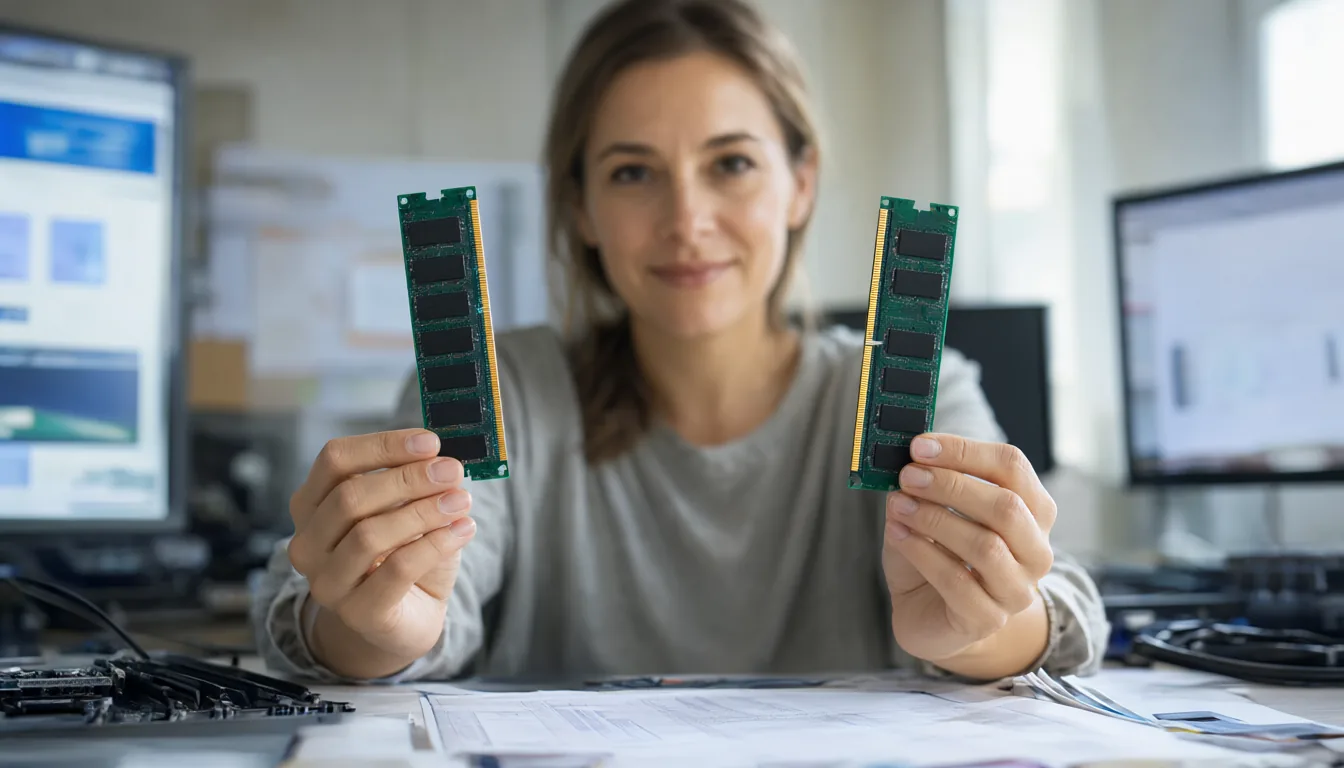
A 32 GB DDR5-6000 kit cost $100-$200 in October 2025. In October 2026 the cheapest one costs about $454, and a 64 GB kit costs about $915. Even old DDR4 has doubled. If you are wondering why RAM is so expensive in 2026, the short answer is artificial intelligence: the data centres training and running AI models are buying memory faster than the world can make it. This guide explains the RAM price crisis with the real numbers, what it means for anyone building a PC for gaming or local AI, and when prices might finally come down.
- Prices now: cheapest 32 GB DDR5-6000 about $454, 64 GB about $915; DDR4-3200 32 GB about $198 (Tom’s Hardware tracker, October 2026, via Engadget).
- Why: Samsung, SK hynix and Micron moved production to HBM for AI GPUs. HBM eats far more wafer per bit, so normal DRAM supply shrank while demand exploded.
- Still rising: TrendForce expects conventional DRAM contract prices to rise another 10-15% in Q4 2026 and NAND (SSDs) 15-20%.
- When it ends: industry leaders and analysts talk about 2028 to 2030. Do not wait for a crash.
- For AI PCs: buy the capacity you will really use (64 GB is the sweet spot for MoE offload), in two sticks, and check used DDR4 platforms.
RAM Prices in 2026 vs Before
Engadget compared prices on 2 November 2026 using Tom’s Hardware’s price tracker and archived Newegg deals. The cheapest listings:
| Kit | 2020 deal price | October 2025 | October 2026 |
|---|---|---|---|
| DDR4-3200 16 GB | $59.99 | – | $104 |
| DDR4-3200 32 GB | $94.99 | – | $198 |
| DDR4 64 GB | $204.99 | – | $489 |
| DDR5-6000 32 GB | (not mainstream) | $100-$200 | $454 |
| DDR5-6000 64 GB | (not mainstream) | – | $915 |
That makes a 32 GB DDR5 kit roughly two to four times more expensive than a year ago. In the UK, a 32 GB DDR5-6000 kit was about 422 pounds in mid-October. Prices for RAM are now so high that HP said memory made up 35% of a PC’s bill of materials in Q1 2026, up from 15-18% the quarter before.
Why RAM Is So Expensive
AI data centres are buying everything
Every AI server needs huge amounts of memory: HBM on the GPUs, plus hundreds of gigabytes to terabytes of DDR5 per server, plus SSD storage. The build-out is enormous. OpenAI’s Stargate project alone could reportedly consume up to 40% of global DRAM output. When buyers with almost unlimited budgets compete with PC makers and gamers for the same chips, prices rise for everyone.
Production moved to HBM
Only three companies make most of the world’s DRAM: Samsung, SK hynix and Micron. All three have shifted wafer capacity to HBM because it sells for much more. HBM stacks several DRAM dies on top of each other and needs much more wafer area per bit than normal DRAM, so each wafer moved to HBM removes a lot of DDR5 and LPDDR5X from the market.
Suppliers are pulling back from consumers
Micron announced it is exiting its Crucial consumer memory business. Samsung reportedly paused new DDR5 module orders to reassess pricing. When the biggest names stop prioritising retail memory, retail prices go up.
Trade restrictions
US-China tensions have limited how much capacity Chinese memory makers can add, and Samsung and SK hynix reportedly stopped selling older chipmaking equipment to Chinese firms. That removes one source of extra supply that might have eased prices.
HBM: The Memory AI Can’t Get Enough Of
High Bandwidth Memory is what makes AI accelerators fast. An NVIDIA B300 carries 288 GB of HBM3e, and the new Rubin GPU carries 288 GB of HBM4 at about 22 TB/s. A single Vera Rubin NVL72 rack holds 20.7 TB of HBM4. Multiply that by the hundreds of thousands of GPUs being installed and you can see where the memory went. I explain these chips in H100 vs H200 vs B200 vs B300 vs Rubin.
For memory makers, this is the best business they have ever had. Micron reported record revenue of $54.23 billion in its fiscal Q4 2026 and $133.19 billion for the full fiscal year, compared with about $37 billion the year before.
Timeline of the Memory Shortage
- 2025: DRAM prices reportedly rise 172% over the year. In November 2025 NAND wafer contract prices jump more than 60% in a month, and Dell’s COO says he has never seen costs escalate this fast.
- Q1 2026: Conventional DRAM contract prices rise about 93-98% quarter over quarter.
- March-April 2026: After TurboQuant, a memory-saving AI technique, is announced, DDR5 kit prices drop nearly 30% by April, but stay far above normal.
- Mid 2026: Prices climb again. The RTX 50 Super launch is held up by the cost of 3 GB GDDR7 chips.
- 30 September 2026: TrendForce forecasts another 10-15% rise in conventional DRAM contract prices and 15-20% in NAND for Q4 2026, with graphics DRAM also trending up.
- October-November 2026: 32 GB DDR5 kits hit about $450; GPU board partners raise RTX 50 prices again.
Knock-On Effects: GPUs, SSDs, Laptops and Phones
- Graphics cards: GDDR7 costs drove repeated RTX 50 price increases. The cheapest RTX 5090 is now about $6,900. Details in why GPU prices are so high.
- SSDs: NAND prices are rising too, with enterprise SSDs (AI storage) seeing the biggest jumps.
- Laptops and desktops: PC makers raised prices and cut base memory. Gartner and IDC expected the 2026 PC market to shrink by around 10-11% and smartphones by 8-9%.
- AI boxes: NVIDIA’s DGX Spark (128 GB of LPDDR5X) went from $3,999 to $6,950, and a cheaper 64 GB version appeared at $4,999.
- Macs: Apple’s memory upgrade prices have held comparatively steady, which has made high-memory Macs look better value for local AI than they used to. See Mac vs PC for local AI.
When Will RAM Prices Go Down?
Not quickly. New memory fabs take two to three years to build and ramp, and the companies that make memory are earning record margins, so they have little reason to flood the market. A 2026 Kearney analysis expects the shortage to last until at least 2030, and SK Group’s chairman has said the same. TrendForce still expects contract prices to rise in Q4 2026.
Things that could change the picture:
- AI spending slows. If hyperscalers cut capital spending, memory would loosen fast.
- Memory-saving software. Better quantization, KV-cache compression and MoE models reduce how much memory each AI query needs. The April 2026 dip shows the market reacts to this.
- New capacity. Samsung, SK hynix and Micron are all expanding; most new lines arrive from 2027-2028.
My advice: if you need RAM for a build in the next six months, buy it when you need it and do not bet on a drop.
Buying RAM for a Local AI PC in 2026
System RAM matters more for local AI than it used to, because mixture-of-experts models can keep most of their weights in RAM and still run fast. My own PC has 128 GB of RAM next to two 16 GB GPUs, which is what lets me run a 125B MoE model locally. But at today’s prices you should size RAM carefully:
| RAM | Good for | Approx. cost (DDR5, Oct 2026) |
|---|---|---|
| 32 GB | Gaming, ComfyUI with GGUF models, LLMs that fit fully in VRAM | about $454 |
| 64 GB | MoE models like Qwen3.5-35B-A3B and gpt-oss-120b with offload, video model block swap | about $915 |
| 96-128 GB | 100B+ MoE models, several models loaded at once | $1,400-$2,000+ |
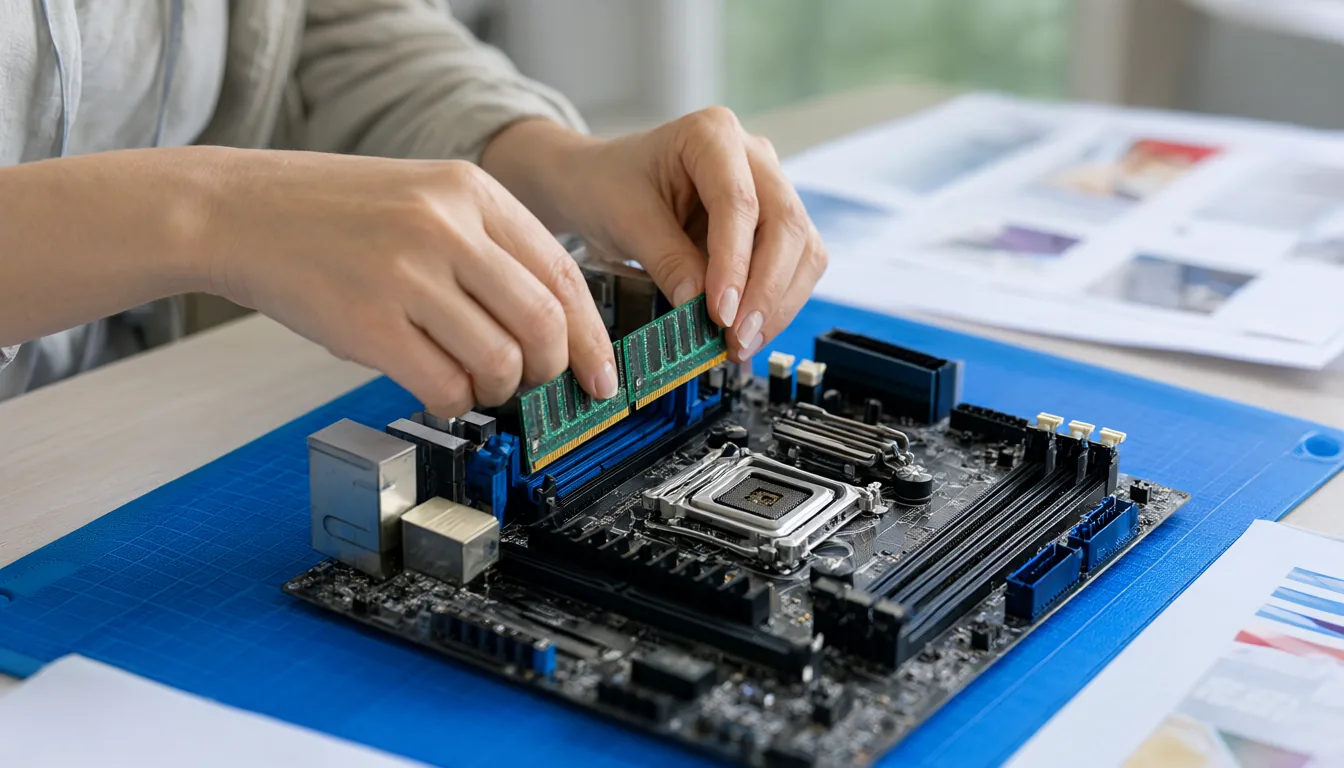
- Use two sticks, not four. Most consumer platforms run four DDR5 sticks at much lower speeds. 2x 48 GB or 2x 64 GB kits are better than 4x 32 GB.
- Speed matters less than capacity for offload. DDR5-5600 vs 6400 changes MoE token speed a little; running out of RAM changes everything.
- Consider a used DDR4 workstation. DDR4 is up too, but used DDR4 server and workstation platforms with eight memory channels can still be a cheap way to get 128-256 GB.
- Check how much you really need. My VRAM and memory requirements guide shows which models need offload at all.
How to Check Your RAM and Whether You Can Upgrade
- Open Task Manager > Performance > Memory on Windows. It shows total RAM, speed, form factor and Slots used (for example “2 of 4”).
- For the exact module type, install the free CPU-Z and open the SPD tab. It shows each stick’s size, DDR generation, speed and maker.
- Look up your motherboard or laptop model on the maker’s site for the maximum supported RAM and the list of tested kits (QVL).
- On laptops, check whether the RAM is soldered. Many thin laptops cannot be upgraded at all, so buy enough at the start.
How to Pay Less for RAM in 2026
- Track prices for a few weeks with a price-history tool before buying. Short dips of 10-20% still happen around sales.
- Buy the capacity you need in one 2-stick kit. Adding a second kit later often fails to run at full speed and costs more now.
- Consider prebuilt PCs and laptops. Big brands signed memory contracts earlier, so a prebuilt sometimes includes RAM for less than buying it separately. Check the exact spec first, because some brands cut base memory this year.
- Used and refurbished DDR4 from reputable sellers is still the cheapest way to big capacity on older platforms.
- Rent for occasional big jobs. If you only need 256 GB of RAM once a month, a cloud machine for a few hours is far cheaper. See my cheapest cloud GPU guide.
Avoid Fake and Relabelled RAM
High prices bring scams. Warning signs: a price far below every major retailer, sellers with few reviews, missing or blurry labels, and “new” kits shipped in plain bags. After installing, check the real size and speed in CPU-Z and run a memory test (Windows Memory Diagnostic or MemTest86) for at least one full pass. Return anything that reports a different size, speed or maker than advertised.
Should You Buy Now or Wait?
| Your situation | My advice |
|---|---|
| Your PC has 8-16 GB and struggles daily | Buy now. Waiting for prices that may not fall until 2028 costs you more in lost time. |
| You have 32 GB and want 64 GB for MoE LLMs | Buy if you run big MoE models every week; otherwise try smaller models or rent first. |
| Planning a new AI PC build | Budget for RAM first, then pick the GPU. A balanced 16-24 GB GPU plus 64 GB RAM beats a top GPU with 32 GB for local LLMs. |
| Just gaming and normal work | 32 GB is plenty; wait if you already have it. |
RAM Stability Fixes After an Upgrade
- PC will not boot or reboots in a loop: the board is training the memory, which can take several minutes on DDR5. Wait, then clear CMOS if it still fails.
- Crashes with XMP or EXPO on: try the next lower speed profile, update the BIOS, or use two sticks instead of four.
- Only half the RAM shows up: reseat the sticks in the slots the manual recommends (often A2 and B2), and check for a BIOS update.
- LLM speed did not improve: extra RAM only helps when a model spills out of VRAM. Check with
ollama psand see my VRAM guide.
Frequently Asked Questions
Why is RAM so expensive right now?
AI data centres are buying huge amounts of memory, and the three big memory makers moved production to HBM for AI chips. That cut supply of normal DDR4, DDR5 and LPDDR memory while demand rose.
How much does 32 GB of DDR5 cost in 2026?
The cheapest 32 GB DDR5-6000 kit was about $454 in October 2026, compared with $100-$200 in October 2025.
Will RAM prices drop in 2027?
TrendForce still expected rises in Q4 2026, and industry leaders talk about the shortage lasting until 2028-2030. A small dip is possible, but a return to 2025 prices is unlikely in 2027.
Is DDR4 cheaper than DDR5 now?
Yes, but it has also roughly doubled. A 32 GB DDR4-3200 kit was about $198 in October 2026.
How much RAM do I need for local AI?
32 GB if your models fit in VRAM, 64 GB if you want to run MoE models with CPU offload, and 96-128 GB for 100B+ models.
Final Thoughts
The 2026 RAM shortage is the other side of the AI boom: every new AI cluster is built from memory that would otherwise have gone into PCs, phones and graphics cards. Prices are still rising, and nobody serious expects a quick reversal. Buy what you need, choose capacity over speed for AI, and keep an eye on this page, which I will update as prices change.
Sources
- Engadget: How much RAM cost in 2020 vs 2026 (2 Nov 2026)
- TrendForce: AI server demand sustains memory contract price increases in 4Q26 (30 Sep 2026)
- Wikipedia: 2024-present global memory supply shortage
- Micron fiscal Q4 2026 results (SEC filing)
- Thunder Compute: NVIDIA Rubin architecture (HBM4 capacity and bandwidth)
- ServeTheHome: DGX Spark price increase